Leave Your Message

Top 10 SS Nonwoven Fabric Machine Manufacturers in China?

China’s nonwoven machinery sector matters because production decisions shape fabric quality, line uptime, and investment risk. Smithers’ report, The Future of Global Nonwovens to 2028, estimated the global market at about US$58.1 billion in 2023 and projected growth to US$77.5 billion by 2028. That expansion places greater attention on efficient, dependable spunbond equipment.

An Ss Nonwoven Fabric Machine typically uses two spunbond spinning beams to form a continuous web. Buyers should look beyond quoted output. Examine polymer compatibility, web uniformity, energy use, automation, changeover time, and access to spare parts. A line may look impressive in a showroom. Its performance over long production runs matters more.

This guide profiles ten Chinese manufacturers and helps readers compare their capabilities, product focus, and service support. The assessment draws on company information and industry context, not a universal certification or endorsement. Details matter. Specifications can vary by configuration, and published capacity figures may not reflect every operating condition. No shortlist is perfect. Use it as a starting point, then request verified references, sample fabrics, and a detailed technical proposal before choosing a supplier.
Top 10 SS Nonwoven Fabric Machine Manufacturers in China?

Understanding SS Nonwoven Fabric Machines and Their Industrial Uses

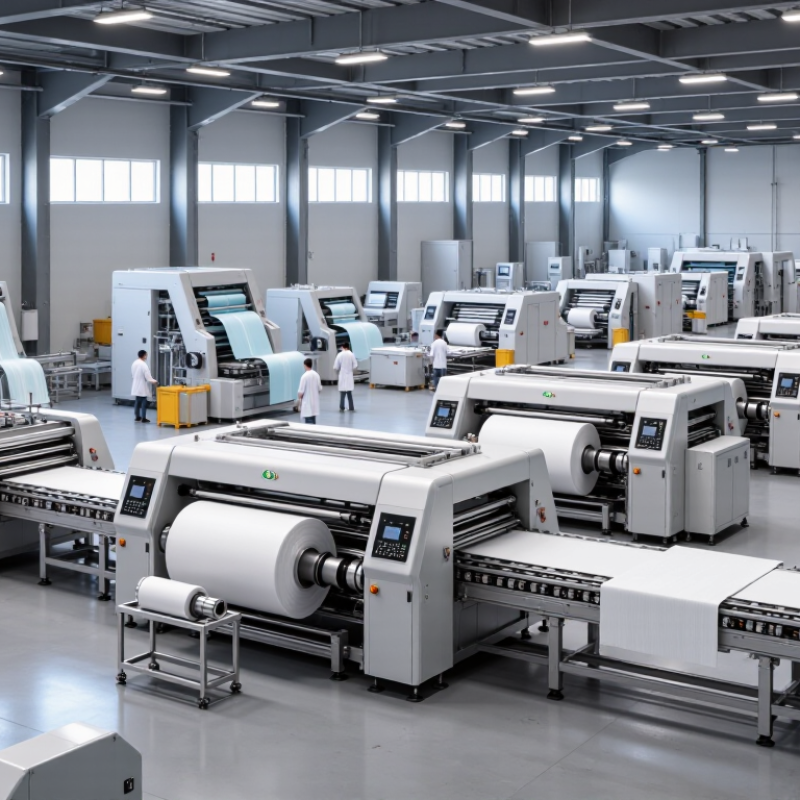
SS nonwoven machines combine two spunbond layers in one continuous production line. Polymer chips are melted, filtered, and pushed through spinnerets to form fine filaments. Cooling air and drawing units stabilize the filaments before they land on a moving belt. A heated calender then bonds the web into a uniform sheet. Small details matter. Uneven airflow or temperature can leave visible thin spots.

The 2023 Worldwide Outlook for the Nonwovens Industry, published by EDANA and INDA, reported 12.7 million tonnes of global nonwoven production in 2022, up 2.6% from 2021. This figure covers nonwovens broadly, not SS output alone. SS materials are used in hygiene products, medical disposables, filtration, and furniture linings, where softness, strength, and air permeability must be balanced. In practice, buyers should assess basis-weight consistency, web width, line speed, and energy use—not just rated capacity. A fast line is not automatically an efficient one. Material choice also changes performance: polypropylene is common, while other polymers may suit specific needs. The label “SS” alone says little about finished quality; sample testing under real operating conditions remains important.
How SS Spunbond Production Lines Work

An SS spunbond production line builds a two-layer web from continuous polymer filaments. Polymer chips are dried when required, melted in an extruder, and pushed through a metering system to spinnerets. Fine filaments emerge in rows. Cooling air helps solidify them, while drawing air stretches and guides them toward a moving collector belt. One spinning unit lays down the first layer; a second deposits another layer above it. Small changes matter. Airflow, polymer temperature, and belt speed can affect filament strength and web uniformity.

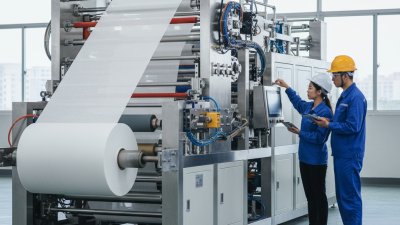
The combined web then passes through a heated calender, where patterned rolls apply pressure and heat to bond selected points. The bond pattern influences softness, strength, and appearance. An operator may check roll temperature, web edges, and fabric weight during production, then adjust settings if readings drift. The finished material is wound into rolls for later converting. A stable line does not guarantee a perfect web: brief airflow changes can leave thin streaks that are easy to miss at a glance. It is worth inspecting samples under steady light and comparing measurements across the roll, not just at its edge.

How an SS Spunbond Production Line Works

Representative temperatures at key stages of a polypropylene spunbond line. Settings vary with the resin, throughput, and equipment design.

Polymer is melted and extruded through a spinneret to form continuous filaments. Quench air cools the filaments, drawing air attenuates them, and a heated calender bonds the web into nonwoven fabric.

Criteria for Evaluating Chinese SS Nonwoven Machine Manufacturers

Evaluating Chinese SS nonwoven machine manufacturers requires more than comparing quoted prices. Check whether the proposed line matches your target fabric weight, working width, and output. Ask for operating data across several product grades, not only the fastest setting. For an SS line, inspect how the two spunbond beams maintain web uniformity and how the calender controls bonding. Request test results for basis-weight variation, tensile strength, and fabric appearance. Useful evidence includes dated production records and clearly defined acceptance criteria.

Factory visits can reveal practical details: clean material paths, accessible filters, guarded rollers, and readable control screens. Ask who handles installation, operator training, and troubleshooting after commissioning. Confirm which spare parts are stocked and how quickly technical support responds. Speak with existing users, ideally those making similar fabrics. No checklist catches everything. A polished demonstration may not reflect a full production shift, so ask to see sustained operation. Small details matter. Compare energy use and changeover time, too, but verify how each figure was measured. Some buyers focus too heavily on headline speed; that number can be less useful than stable quality and reliable service. A careful evaluation may still leave unanswered questions, and those should be recorded before purchase.

Profiles of 10 SS Nonwoven Fabric Machine Manufacturers in China

China’s SS nonwoven fabric machine suppliers vary in scale and specialization. These ten profiles are useful comparison points, not a verified ranking. Some manufacturers focus on compact lines for smaller factories, with straightforward controls and modest floor-space needs. Others build high-output systems designed for continuous production and wider fabric rolls. A third group offers integrated process planning, from resin feeding to winding. Some specialize in spunbond technology, while others adapt line configurations to different fabric weights. Details matter.

Several manufacturers emphasize automation, including touchscreen controls and tension monitoring. Others focus on mechanical simplicity, which can make routine maintenance easier. A profile worth examining is the supplier that provides clear commissioning plans and operator training. Another may stand out for local parts availability and responsive technical support. Some offer customized layouts, but customization can add lead time. That trade-off deserves a closer look.

Before comparing quotations, ask for the usable fabric-width range, expected output, utility requirements, and maintenance intervals. Request sample fabric data, not only headline capacity figures. Check how evenly the line forms and bonds the web across its width. I would also ask what is excluded from installation; quotes can differ there. A polished brochure is not proof of reliable performance. Operators’ feedback can reveal the less visible details.

Comparing Manufacturers by Technology, Capacity, Service, and Cost

When comparing SS nonwoven fabric machine manufacturers in China, look beyond quoted output. An SS line uses two spunbond beams, so stable polymer flow and even web formation matter. Ask for sample rolls at your target width and basis weight. Check edge consistency, tensile results, and basis-weight variation across the roll. A neat showroom is not proof. Request a production trial.

Capacity should match your real order mix, not just the largest figure in a brochure. Confirm usable line speed, changeover time, staffing needs, and energy use under comparable conditions. Service can determine how quickly a small fault becomes lost production. Ask which technicians provide installation, how training is delivered, and whether common spare parts are stocked locally. Get response times in writing. Details matter.

Compare total cost, including commissioning, utilities, maintenance, and consumables—not only the machine price. Review the warranty and clarify which components it covers. Speak with operating customers, if possible, and ask about downtime after the first year. Some details may still be hard to verify before a visit; note that uncertainty rather than treating every promise as fact. A careful comparison is less tidy, but more useful.

Top 10 SS Nonwoven Fabric Machine Manufacturers in China? — Comparing Manufacturers by Technology, Capacity, Service, and Cost

Anonymous procurement comparison. The entries below are illustrative capability profiles, not verified rankings or claims about specific manufacturers. Output, service scope, and pricing depend on the project and should be confirmed in a written quotation.

Profile SS Technology / Configuration Typical Evaluation Scope Capacity Information Service to Verify Relative Cost Position Best-Fit Buyer
Profile 01 Standard two-beam PP spunbond (SS); conventional calender bonding Confirm usable web width, basis-weight range, resin specification, and product-change requirements Supplier-guaranteed kg/h required; output varies with width, basis weight, and operating conditions Installation, commissioning, operator training, and spare-parts list Entry to mid-range, depending on scope Buyers prioritizing a conventional SS line and a defined product range
Profile 02 SS line with upgraded process controls and recipe management Review control-system functions, alarms, data logging, and recipe-recall capability Request guaranteed output at named basis weights and product specifications Remote troubleshooting availability, response times, and software support terms Mid-range; automation options affect the quotation Plants seeking repeatable settings and production records
Profile 03 SS line configured for a wider working web Verify usable width, edge-trim arrangement, uniformity across the web, and downstream handling Do not compare nominal line speeds alone; request output at the target width and gsm On-site installation plan, commissioning duration, and local service coverage Mid to high, driven by line width and auxiliary equipment Producers supplying wider rolls or higher-volume converting operations
Profile 04 SS line with emphasis on low-basis-weight production Check basis-weight range, web uniformity data, start-up waste, and stable running conditions Require a documented performance test at the intended low gsm and usable width Process support during product trials and access to operating documentation Mid-range; performance guarantees may affect price Manufacturers whose product mix includes lightweight nonwovens
Profile 05 SS line designed around a broader basis-weight product mix Confirm changeover procedure, operating window, and quality results across the requested range Request separate guaranteed figures for each target product, not one headline capacity Training for product changeovers and troubleshooting support Mid-range to high, depending on flexibility and included options Plants serving several end uses with differing fabric specifications
Profile 06 SS line with higher-level automation and monitoring options Assess included sensors, control functions, data access, and integration boundaries Capacity remains configuration-specific; obtain a signed acceptance-test protocol Clarify remote access, cybersecurity responsibilities, and support availability Mid to high; specify software and automation inclusions in the quote Operations prioritizing process visibility and automated control
Profile 07 SS line with customized calender and winding arrangement Match bonding pattern, roll format, winding requirements, and downstream converting needs Request output and roll-quality results using the buyer's actual product specification Confirm mechanical commissioning and support for customized components Project-specific; customization can increase cost and lead time Buyers with defined bonding, roll, or converting requirements
Profile 08 SS line supplied as a broader turnkey package Check the battery limits for utilities, polymer handling, installation, and auxiliary equipment Compare line output only after aligning included equipment and operating assumptions Confirm who is responsible for installation, commissioning, and acceptance testing Higher initial package value; total cost depends on scope completeness First-time investors seeking a single coordinated project scope
Profile 09 SS line with an emphasis on accessible maintenance and standard components Review maintenance access, component documentation, recommended consumables, and parts interchangeability Obtain a production guarantee and separately assess expected maintenance requirements Check spare-parts lead times, warranty exclusions, and service escalation contacts Potentially competitive; compare lifecycle cost, not purchase price alone Buyers focused on maintainability and predictable parts procurement
Profile 10 Custom SS line engineered to a buyer-defined product and plant layout Evaluate layout drawings, utility loads, product trials, safety provisions, and interface responsibilities Set capacity only after the supplier reviews the agreed product mix and site conditions Agree on project milestones, acceptance criteria, training, and post-start-up support Highly project-specific; obtain a scope-matched commercial proposal Investors with non-standard products, layouts, or integration requirements

Comparison note: “SS” generally describes a spunbond structure with two spunbond layers/beam systems. Machine capacity and price are not standardized figures: compare written guarantees using the same usable width, basis weight, resin, operating hours, included equipment, and acceptance-test conditions.