Leave Your Message

Why Choose a Spunbonded Nonwoven Machine?

A Spunbonded Non-Woven Machine turns polymer granules into a continuous web of fine, bonded filaments. The process sounds simple. The details are not. Temperature, airflow, line speed, and web weight must stay in balance. A small change can affect fabric strength, softness, and uniformity.

Nonwovens expert Dr. Seshadri Ramkumar has described nonwovens as “an important part of our everyday life.” That observation helps explain why equipment choice matters. Spunbond fabrics serve agriculture, hygiene, medical, and packaging applications, each with different performance needs. A suitable machine can support consistent output, efficient material use, and practical product changes. Buyers should examine production capacity, polymer compatibility, energy use, maintenance access, and supplier support—not just the quoted price.

Look closely at the real operating conditions. Can operators reach the filter area safely? Does the line maintain stable fabric weight during a product change? These details matter on a busy factory floor. Still, no machine guarantees success by itself. Training, raw-material quality, and process control shape the final result. Some specifications may look impressive on paper yet prove less useful in daily production. That deserves honest scrutiny. Choosing well means matching the Spunbonded Non-Woven Machine to the products, people, and production goals it must serve.
Why Choose a Spunbonded Nonwoven Machine?

How Spunbond Machines Convert Polymer Melt into Continuous Filament Webs

Why Choose a Spunbonded Nonwoven Machine?

How Spunbond Machines Convert Polymer Melt into Continuous Filament Webs

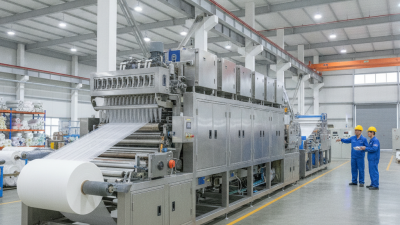
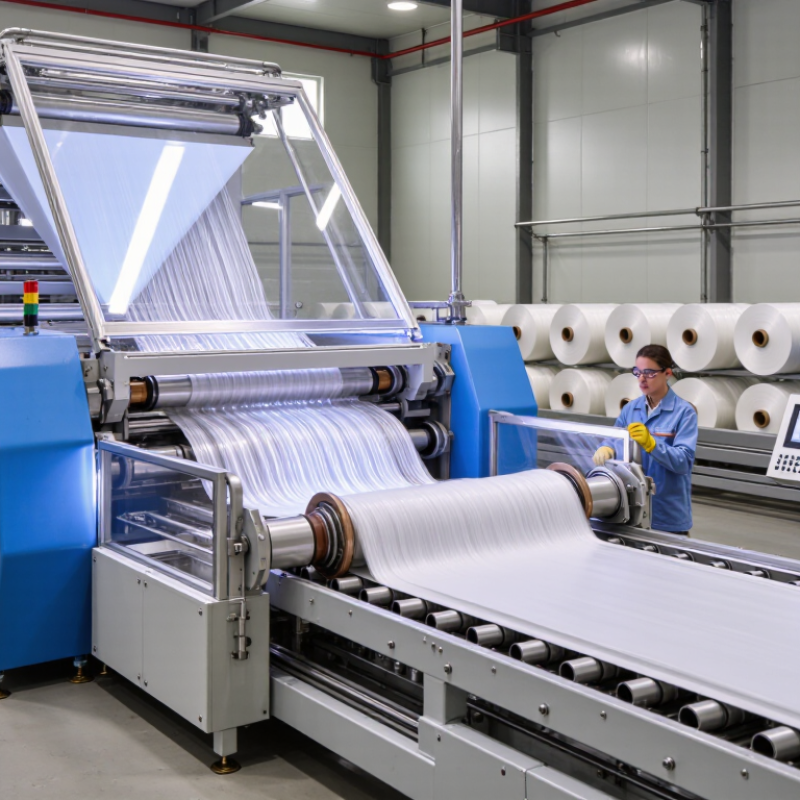
A spunbond machine begins with polymer pellets, which are heated and melted in an extruder. A metering pump then pushes the melt through a spinneret, forming many fine, continuous filaments. The spinneret’s small openings matter. Uneven flow can create visible differences in the finished fabric.

High-speed air cools and draws the filaments as they leave the spinneret. They travel toward a moving belt, where a controlled airflow helps spread them into a loose web. Air pressure, polymer temperature, and belt speed must work together. If one setting drifts, the web may show thin patches or uneven weight.

The web is then bonded, often between heated rollers, to give it strength and stability. Bonding pressure and temperature affect softness, tensile strength, and appearance. Too much heat can flatten the fabric; too little may leave weak areas. There is no single setting that suits every polymer or product. Operators check samples and adjust conditions, sometimes through trial and error. It is worth remembering that stable production does not mean every roll is identical. Regular inspection helps catch small changes before they become costly waste.
Why 15–30 μm Filaments Enable Lightweight, Uniform Nonwovens

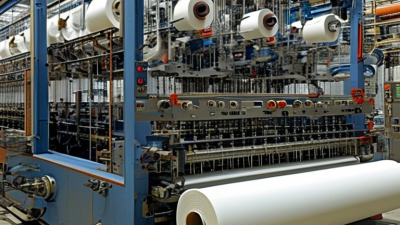
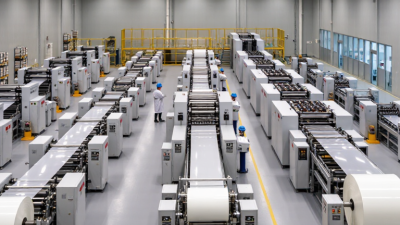
A spunbonded nonwoven machine can turn continuous polymer filaments into a web with controlled weight and coverage. Filaments around 15–30 μm offer a useful balance: finer strands create more contact points, helping distribute material evenly across a lightweight sheet. The effect is visible on the line: a stable curtain of filaments can cover the belt without obvious thin stripes.

PlasticsEurope’s polypropylene eco-profile reports a density near 0.90 g/cm³. Using that value, a simple cylindrical-filament calculation gives about 0.16 mg per metre for a 15 μm filament, versus 0.64 mg for a 30 μm one. That fourfold difference comes from diameter, not a change in polymer. At equal web weight, finer filaments can therefore provide more individual strands and finer coverage. These figures are geometric estimates, not a guarantee of finished-fabric performance.

But finer is not automatically better. Drawing, quench airflow, die-hole consistency, and laydown all affect uniformity; unstable settings can cause breaks or uneven streaks. A machine should hold the filament range steadily, not merely reach it briefly. Real production is less tidy than a specification sheet. The right setting depends on the polymer, target basis weight, and end use.

How 10–150 g/m² Basis Weights Match Different Product Requirements

Why Choose a Spunbonded Nonwoven Machine?
How 10–150 g/m² Basis Weights Match Different Product Requirements

Basis weight is a practical starting point, not a complete product specification. EDANA’s 2023 European nonwovens statistics reported about 2.9 million tonnes of production, serving markets with very different strength, softness, and barrier needs. At roughly 10–25 g/m², lightweight webs can suit hygiene topsheets and agricultural covers. Around 25–60 g/m², fabrics may be specified for shopping bags, protective wraps, or lining layers. Heavier webs, from about 60 to 150 g/m², can support sturdier bags, furnishing backings, and selected construction applications. These are working ranges, not fixed rules; fiber type and bonding also matter.

Machine selection should reflect the target weight and the tolerance the product can accept. At 10 g/m², a 1 g/m² variation equals 10% of the target. At 150 g/m², it is less than 1%. Small differences matter. A line making light webs needs careful control of polymer flow, drawing, and web uniformity; heavier grades require sufficient bonding without making the fabric rigid. ISO 9073-1 specifies a method for measuring nonwoven mass per unit area, helping manufacturers check samples against targets. Test the fabric, not just the machine display. Real production can still reveal uneven edges or weak spots, so trial runs and repeat measurements remain essential.

Why Choose a Spunbonded Nonwoven Machine? - How 10–150 g/m² Basis Weights Match Different Product Requirements

Typical Basis Weight Example Product Uses Why This Weight Range May Fit Key Selection Considerations
10–15 g/m² Lightweight hygiene components, disposable protective layers, and some agricultural covers Low material use and a light, flexible web can suit applications where coverage and softness are more important than high strength. Check web uniformity, opacity, handling strength, and whether the product needs an additional layer or treatment.
16–25 g/m² Crop covers, lightweight garment covers, and selected hygiene or medical nonwoven layers Offers a balance of light weight, coverage, and basic durability for products that are handled or laid over a surface. For outdoor use, consider UV stabilization and the required service life. Medical uses may require validated material specifications and processing.
26–40 g/m² Disposable gowns and covers, mattress or furniture components, and reusable-style shopping bags with light loads A heavier web can provide greater substance and handling strength than very lightweight grades. Product performance also depends on fiber diameter, bonding, web structure, seams, and any lamination or finishing.
41–60 g/m² Shopping bags, protective packaging, and selected filtration or furnishing layers Often considered when a product needs more body and durability while remaining relatively lightweight. For bags and packaging, test tear, tensile, and seam strength against the intended load and use conditions.
61–100 g/m² Durable carry bags, upholstery or bedding components, and heavier protective or industrial layers Higher basis weight generally means more material per unit area and can support a more substantial product structure. Confirm that the required strength, stiffness, breathability, and cost are appropriate; basis weight alone does not guarantee performance.
101–150 g/m² Heavy-duty bags, furnishing substrates, and selected construction or geotextile applications Suitable for product designs that call for a dense, robust nonwoven layer or added material mass. For geotextile or construction uses, specify relevant properties such as tensile strength, puncture resistance, permeability, and durability—not just basis weight.

Note: These are indicative application ranges, not universal specifications. The appropriate basis weight depends on the polymer, fiber and web design, bonding method, finishing, product construction, and applicable performance requirements. Confirm the target weight and finished-product tests with the machine and material suppliers.

How Thermal Calendering Balances Strength, Porosity, and Fabric Hand

Why Choose a Spunbonded Nonwoven Machine?

Thermal calendering is where a spunbond web gains strength without becoming a sealed sheet. Heated rolls press the filaments together at selected points. More bonding can improve tensile strength, but excessive heat or pressure may flatten the web and restrict airflow. The fabric can also feel stiff. Small changes matter.

The 2023 Worldwide Outlook for the Nonwovens Industry, published by INDA and EDANA, estimated global nonwoven production at roughly 13 million tonnes in 2022. That scale makes consistent processing important, but there is no universal calender setting. Polymer type, basis weight, line speed, and embossing pattern all affect the result. Operators can compare tensile performance with air permeability, using methods such as ISO 9073-3 and ISO 9073-15.

A practical check is to handle the fabric as well as test it. Does it drape over a hand, or spring back like a stiff filter? Does air pass evenly across the roll, or do dense bond marks interrupt the surface? These details expose trade-offs that a single strength number can hide. Even experienced teams may need to adjust settings after a material change. That is worth admitting: a “stronger” web is not always the better fabric.

How ISO 9073 Tests Compare Spunbond Fabric Performance Across Applications

A spunbonded nonwoven machine matters because process settings shape the fabric’s structure. ISO 9073 methods help buyers compare the finished material with consistent measurements. They do not rate a machine by themselves. They show what its fabric can do.

For hygiene products, basis weight and tensile strength can reveal whether a light web holds together during converting. ISO 9073-1 measures mass per unit area, while ISO 9073-3 evaluates tensile properties. For filtration or protective covers, air permeability can be more relevant; ISO 9073-15 provides a method for measuring airflow through fabric. A higher airflow value is not automatically better. The intended barrier and breathing requirements matter.

Tear resistance and thickness also help distinguish fabrics for bags, covers, or cushioning. Yet lab results have limits. A narrow test strip cannot fully represent seams, folds, or repeated handling in real use. Compare samples conditioned and tested in the same way, and check several production rolls. Small differences count. They may also come from sampling or process variation, not a major design change. ISO 9073 data is most useful when paired with application trials and clear acceptance criteria.